Sponsored Results

Sponsored results are paid advertisements, often located above or to the right of organic results. Unlike organic results, they focus on commercial intent, ranked according to relevance and revenue. Typically, they operate on a pay-per-click model, where advertisers are charged only when users click the ads.

The following sections present the types of sponsored results identified during the analysis phase: regular and enriched textual ads, which follow a textual listing format similar to organic results, shopping ads, rich media ads, and brand advertisements. Moreover, it is also worth noting that while DuckDuckGo does include sponsored results, none were observed during this analysis.
Regular Textual Ads

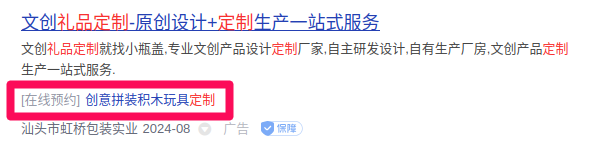
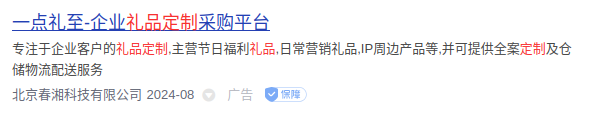
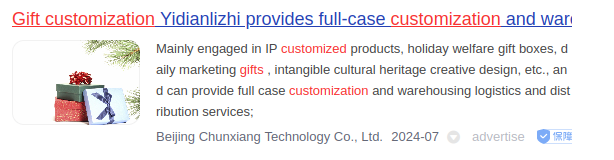
Regular textual ads share the same structural elements as organic regular results, with the only distinction being their labeling with terms such as sponsored or ad, as illustrated below.

Example for Baidu

Enriched Textual Ads

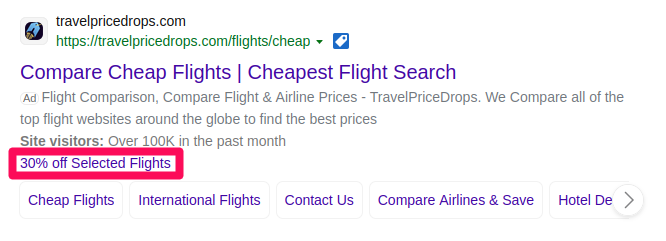
Similar to organic enriched results, enriched textual ads are an extension of regular textual ads, incorporating additional elements. Some of these elements are shared between enriched textual ads and organic enriched results, while others are unique to enriched textual ads.

Bellow are presented a summary of all the identified elements present in the enriched textual ads.

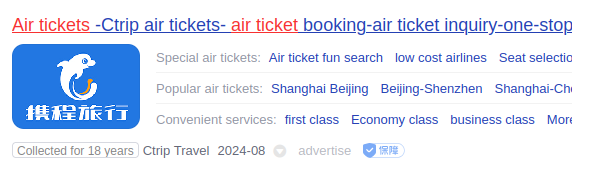
An image from the website that can appear along with the snippet.
Example for Baidu
Links from the same domain are grouped beneath the text result. Also known as 'quicklinks'.
Example for Baidu
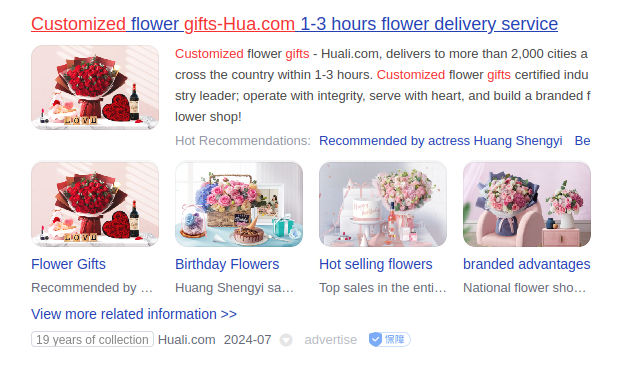
Sitelinks whose format contain an image and a small snippet beyond the link itself.
Example for Baidu
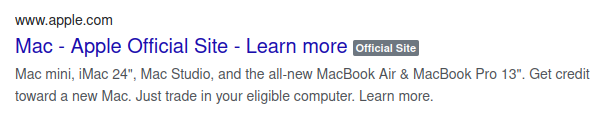
An icon indicating the website is verified as an official source.
Example for Yahoo!
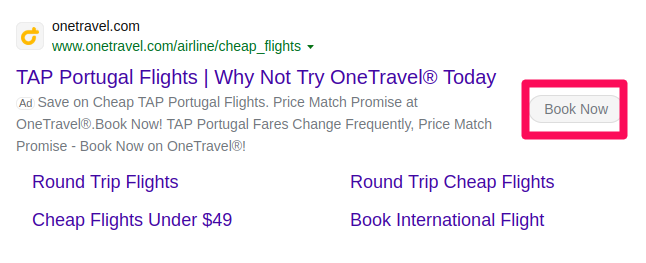
A button facilitating users to perform specific actions directly from the SERP.
Example for Bing
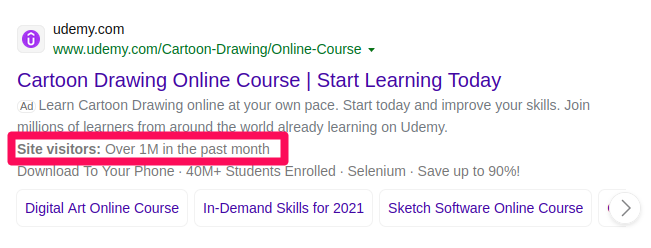
It appears in search results when a website includes schema markup data. The types of Structured Snippets that can appear include How-to, Event, FAQ, Recipe, Video, Article, Product, and many more.
Example for Bing
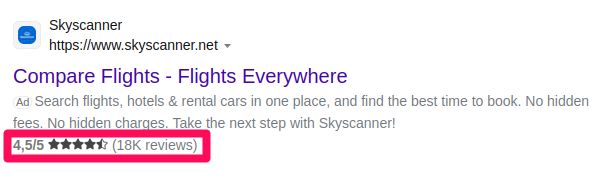
Displays the average rating of a product, service, or business based on user reviews. This rating is retrieved from the website's structured data.
Example for Bing
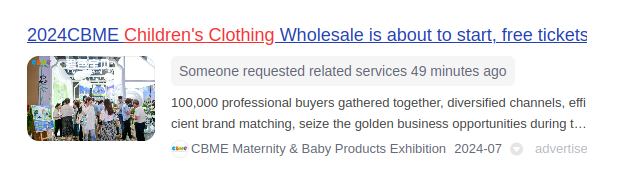
Tag that informs that someone has recently interacted with the service.
Example for Baidu
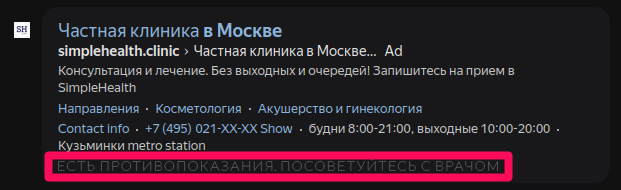
Message that says 'There are contradictions, consult your doctor'.
Example for Yandex
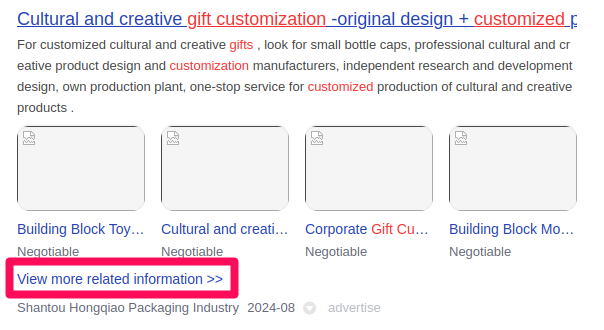
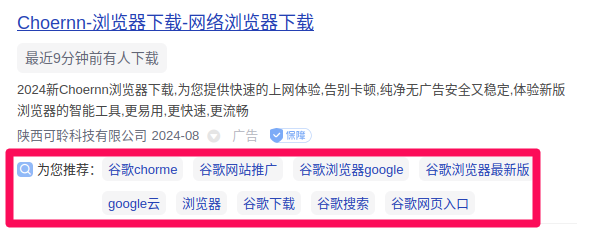
Box appearing at the bottom of the result after it has been visited that provides links to related searches.
Example for Baidu
Icon that when hovered indicates that the objective of the result is to sell products/services.
Example for Yandex

Shopping Ads

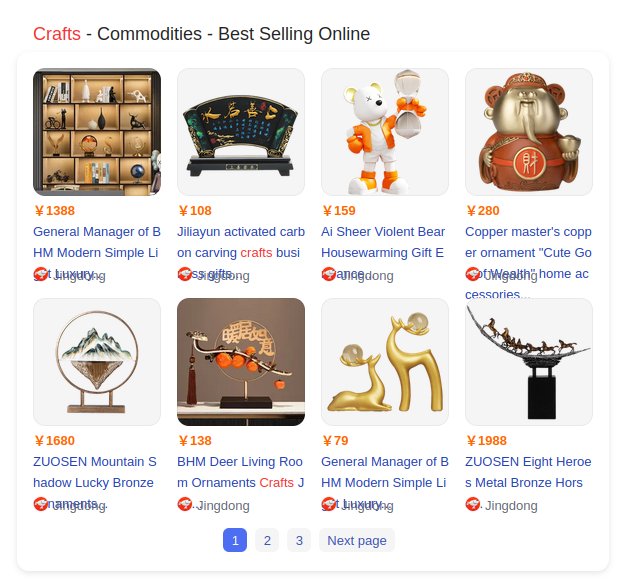
Shopping ads are advertisements presented in a card format that typically include a product photo, price, store, ratings, and available offers. Similarly to textual results, these ads are identified with labels such as sponsored or ad.

Example for Baidu

Rich Media Ads

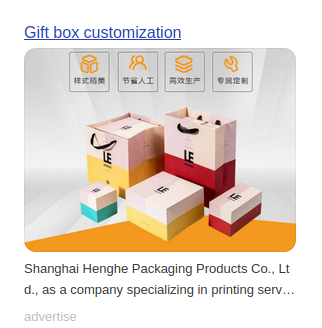
Rich media ads, also referred to as Banners on search, are advertisements typically positioned at the top-right of the SERP, identified on Baidu, Bing, Yahoo! and Yandex. Their format includes a prominent image and text links, as illustrated below. The primary purpose of this format is to capture increased user attention. On Baidu, these ads are often triggered by broad product categories or branded searches.

Example for Baidu

Brand Ads

In addition to the sponsored results presented so far, there is another type of ad on Baidu known as brand advertisements, which are categorized into two distinct types: Top banners and Brand zone ads.

Top Banners

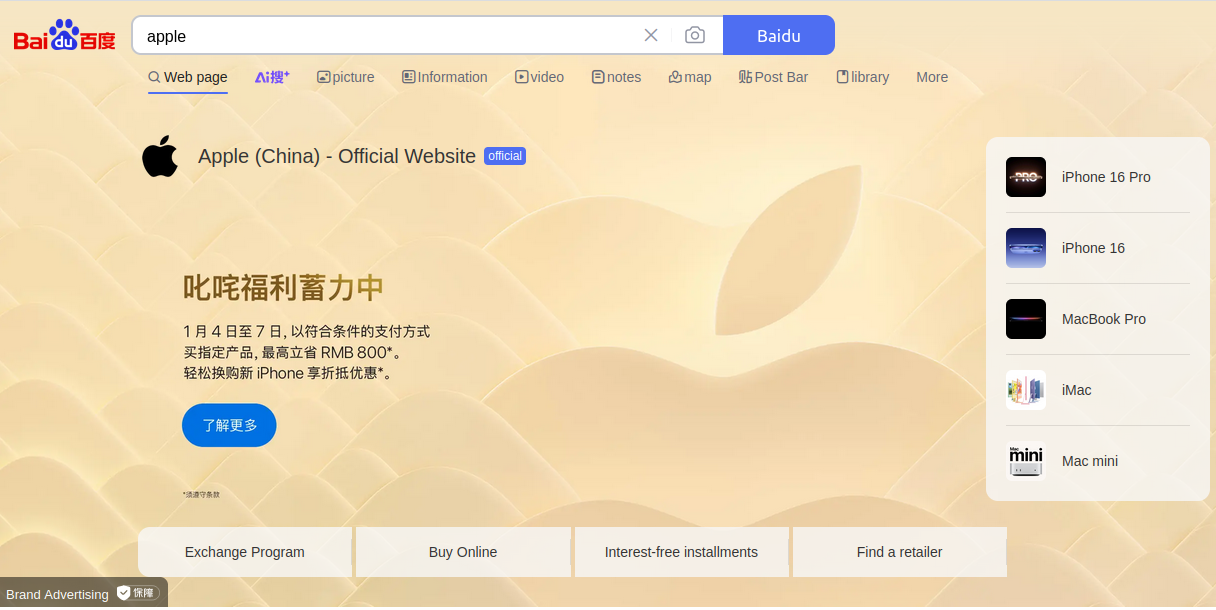
The Top banner appears as a banner that spans the entire top of the page, creating a prominent visual impact, as illustrated below.

Example for Baidu

Brand Zone Ads

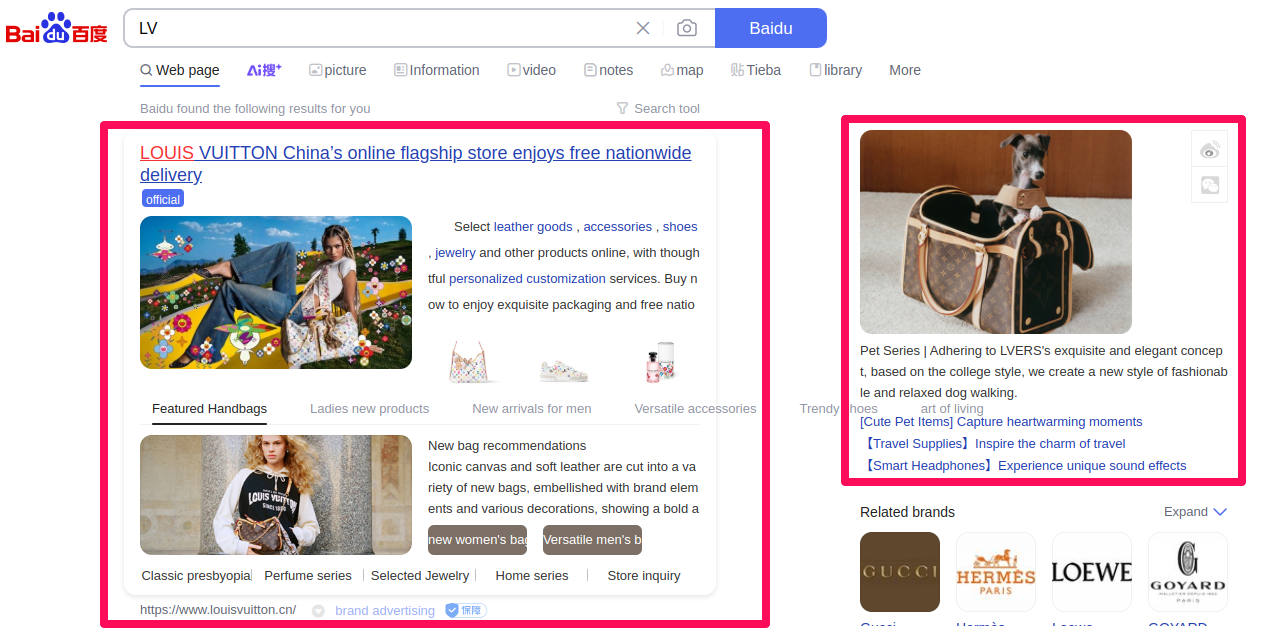
Brand zone ads are customizable and interactive advertisements for brand term search queries. These ads are placed on the top center and right columns, as shown below. Unlike pay-per-click ads, brand zone ads operate on a fixed-cost model for a predetermined duration, ensuring their visibility for the specified search query. Notably, only brand terms are available to be purchased, and they can only be bought by the respective brand owners themselves.

Example for Baidu